

Every once in a while, an interview forces a fresh perspective on an entire industry. Talking to Hedda Felin, CEO of the Hurtigruten Group, on stage at the WTM Telegraph Travel Leaders Summit was a truly inspiring experience.
In a sector often criticised for surface-level sustainability pledges, Hurtigruten makes a serious effort to align its commercial operations with the needs of local communities and with environmental stewardship that protects them. The result is a vision that feels built for the future.
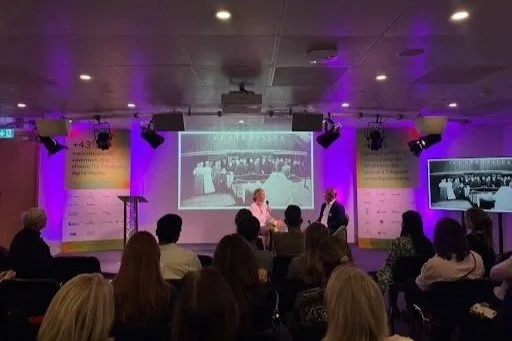
Her passion for Norway, its heritage, and the practical realities of managing a historic brand shone through immediately. Rather than relying on standard corporate talking points, she spoke from a place of deep, authentic care and a clear understanding of the impact the business has on all its stakeholders.
To understand Hurtigruten, one must understand its origins. For over 130 years, its ships have served as a vital transport link for Norway’s coastal towns, moving goods, post, and passengers year-round. Balancing that traditional lifeline function with modern commercial tourism is an ongoing challenge. While mass tourism can easily strain local infrastructure, Hurtigruten aims to manage passenger numbers at a scale that supports coastal settlements rather than overwhelming them.
As a major player in Norwegian travel, Hurtigruten works closely with bodies such as Innovation Norway and Visit Norway. Much of its marketing focuses on broad awareness of Norway as a destination, though balancing its own brand promotion remains a delicate exercise.
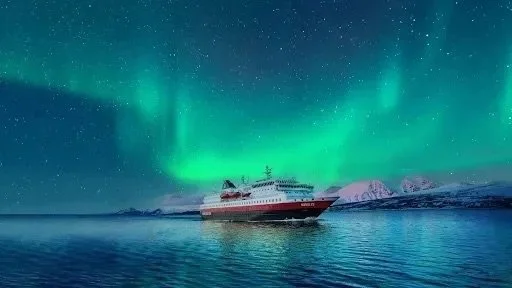
Hedda explained how the company’s small-ship cruise operations grew out of this coastal foundation, including essential supply voyages to Svalbard. Operating in high-latitude environments such as 78 degrees north highlights the inherent paradox of Arctic travel: providing necessary transport and tourism revenue while bringing human activity into fragile polar ecosystems.
Hedda explained how the company’s small-ship cruise operations grew out of this coastal foundation, including essential supply voyages to Svalbard. Operating in high-latitude environments such as 78 degrees north highlights the inherent paradox of Arctic travel: providing necessary transport and tourism revenue while bringing human activity into fragile polar ecosystems.
The wider cruise industry faces scrutiny over carbon emissions, heavy fuel reliance, and environmental degradation. With characteristic candour, Hedda acknowledged these pressures, noting that building ever-larger vessels is becoming increasingly difficult, and is a path Hurtigruten will not follow. Hurtigruten became the first cruise operator to voluntarily ban the use of heavy fuel oil across all operations in 2009. The company has engaged with destinations and fellow cruise operators worldwide to share its learnings, aiming to build a more sustainable, community-focused approach across the sector.
This style of travel isn’t for everyone. If you’re looking for big ocean liners with grand theatres, constant entertainment, and sprawling amenities, you won’t find that here. But for travellers who want a quieter, more grounded way to experience Norway’s landscape up close, it offers something genuinely special.
Hearing Hedda’s perspective gave a clear sense of how thoughtfully the team balances heritage, community, business, and environmental care. As the maritime world works out its next steps, Hurtigruten stands out as an encouraging example of how commercial cruising and genuine stewardship can work together
Hearing Hedda’s perspective gave a clear sense of how thoughtfully the team balances heritage, community, business, and environmental care.
As the maritime world works out its next steps, Hurtigruten stands out as an encouraging example of how commercial cruising and genuine stewardship can work together
