Aviation Marketing in 2025: What We Learned at The Telegraph's Aviation Huddle
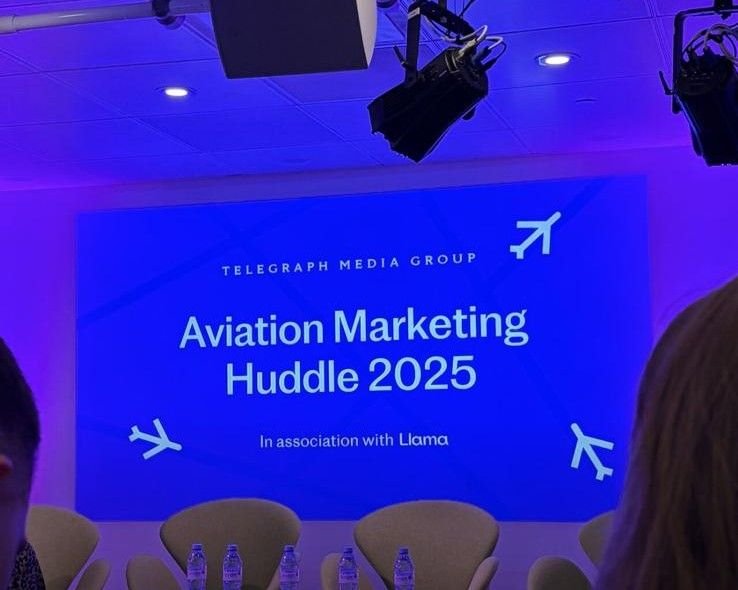
Last week,we found ourselves in The Telegraph's headquarters for their Aviation Marketing Huddle.
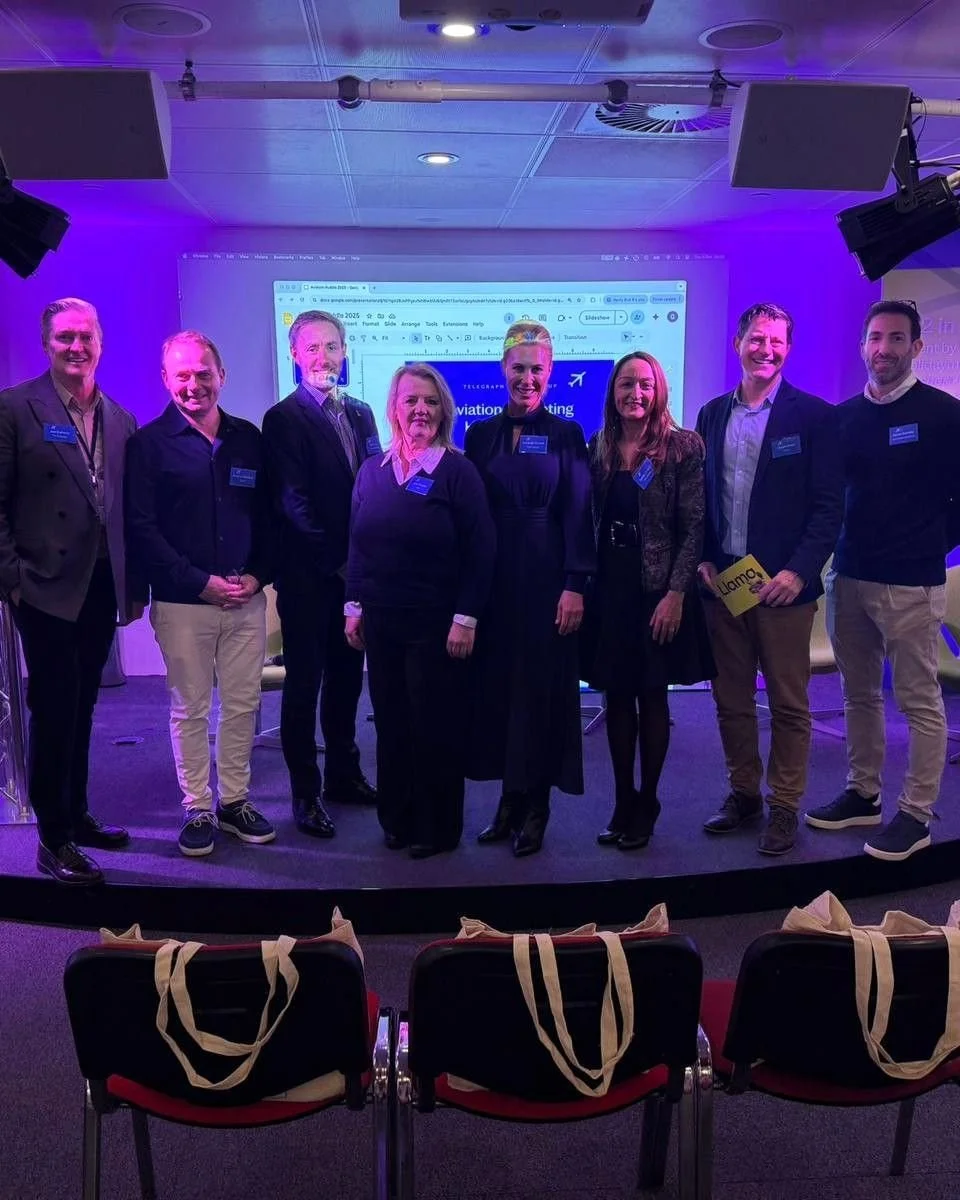
The panel brought together some properly experienced voices: Julie Murphy from ANA, Rob Lang from Edinburgh Airport, Simon Kamsky (formerly of Etihad), and Sumati Sharma from Oliver Wyman. Then we got a masterclass from The Telegraph's Louise Merry on search trends, followed by a fireside chat with Virgin Atlantic's Annabelle Cordelli, with Andrew leading the conversation.
Rather than give you a blow-by-blow recap, here are the three big themes that actually matter for aviation marketing in 2025.
1. Marketing Budget Allocation Is the Eternal Balancing Act
If there was one topic that generated proper debate, it was the brand versus performance marketing split. Annabelle Cordelli from Virgin Atlantic put it brilliantly: she talks about the "balanced diet" approach. All tactics and no brand strategy? That's a high-sugar diet. You'll get short-term peaks, but you won't build long-term value.
The traditional wisdom used to be 70% brand, 30% performance. But in an industry where business is tough and CFOs are nervous, there's constant pressure to shift more budget into performance marketing because you can measure it immediately.
Annabelle's been at Virgin since 2019, which means she's navigated the absolute worst of it (joining just before the pandemic). Her biggest learning? You've got to demonstrate value over time. That means having the measurement tools in place to show both short-term impact (what incremental revenue did this campaign drive?) and long-term brand building (how is my brand equity growing versus price and other variables?).
Rob Lang from Edinburgh Airport shared something interesting: his airport essentially operates as a mini media agency for airline partners, buying local media on their behalf. It's a smart play. They've got the local knowledge, they can secure rates that London-based agencies can't, and they can move fast when a route needs tactical support. It's the kind of collaboration that makes sense when you step back and think about aligned incentives.
2. The Loyalty Programme Has Evolved (And You Need to Keep Up)
Remember when frequent flyer programmes were just about collecting miles? Those days are gone. Sumati dropped some eye-opening stats: there's a 6% price premium linked to having a strong loyalty programme. Delta Airlines made $7.4 billion (yes, billion) just from their credit card programme, with a target to hit $10 billion.
The loyalty programme isn't just a retention tool anymore. It's a revenue engine that's too valuable to ignore.
The challenge? As Sumati pointed out, everyone's got the emails about devalued points. Everyone's experienced a lounge that feels more like a railway station at rush hour. The balance between exclusivity and accessibility is getting harder to strike.
ANA's Julie Murphy shared their particular puzzle: how do you build loyalty in markets where realistically, people might only fly to Japan once every few years? Their answer involves leaning heavily into Star Alliance partnerships and making sure they're visible even when they're not the metal on the route
3. AI Overviews Are Changing Search (Whether You're Ready or Not)
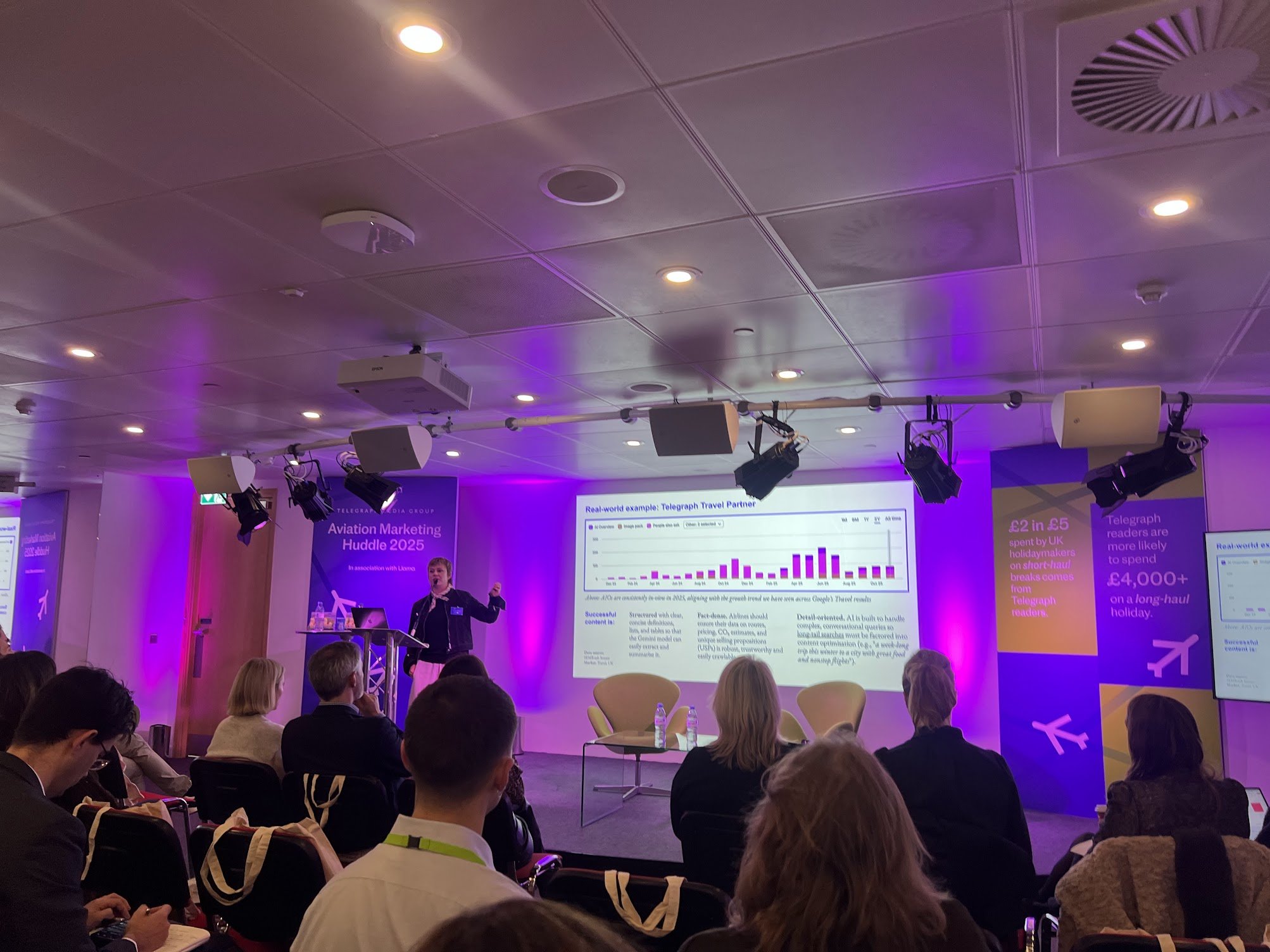
Louise Merry from The Telegraph delivered what might have been the most immediately actionable presentation of the day. If you're in travel marketing and you're not paying attention to AI Overviews in Google search results, you need to start. Now.
Here's the headline: one in four travel-related searches now generate an AI Overview (that AI-generated response at the top of Google's results page that synthesises information from multiple sources). This time last year? Less than half a percent.
To put that in context, AI Overviews are now showing up more often than the paid ads that used to dominate the top of the page. Those PPC units are getting pushed down.
So what actually works for getting your content featured in AI Overviews? Three things:
Structure matters. Content that's clearly formatted with definitions, lists, and tables performs well. Think about how easy it is for Google's Gemini model to scrape and present your information.
Depth wins. Long-read, fact-dense articles are getting pulled into AI Overviews more than thin content. Airlines should be thinking about route data, pricing information, CO2 estimates, USPs (all formatted cleanly).
Think long-tail. Traditional SEO focused on high-volume, short keywords. AI optimisation Generative Engine Optimisation actually favours longer, more conversational queries. Someone searching "week-long trip this winter city great food non-stop flights" might not have been a priority keyword before. Now? That's exactly the kind of query AI Overviews are designed to answer.
The Telegraph's own travel content is being regularly featured in AI Overviews precisely because they've invested in detailed guides, rich data, and well-structured evergreen content.
The Resilience Test: Navigating Disruption
One thread that ran through the entire day was operational resilience. Simon Kamsky made the point that as a CMO, you don't want to be allocating too much budget to operational issues (that's a sign something's broken elsewhere). But you absolutely need robust processes for crisis communications.
Julie Murphy from ANA shared their experience with Russian airspace closures. They couldn't fly the London route for three months while pilots retrained for different routing. That's not a small comms challenge. What saved them? The communication infrastructure they'd built during the pandemic. They learned then that proactive, multi-channel communication was non-negotiable.
It reminded me of something Rob Lang said about Edinburgh Airport: "You're completely anonymous unless you have a bad game." Airports and airlines both operate in this strange space where operational excellence is invisible, but any failure is highly visible and emotionally charged.
The Bigger Picture
What struck me most about the day wasn't any single insight. It was the collective acknowledgement that aviation marketing has genuinely become more complex. You're balancing brand and performance. You're navigating geopolitical disruption. You're trying to build loyalty programmes that don't feel transactional whilst extracting genuine financial value. You're optimising for AI search results that didn't exist 18 months ago.
And through all of that, you've got to keep bums on seats and maintain margin in an industry where fuel costs, slot restrictions, and regulatory changes can blow up your projections overnight.
It's not easy. But the marketers who are getting it right (and there were several in that room) are the ones who've got real clarity on their strategy, the measurement tools to prove value, and the resilience to navigate whatever disruption comes next.
If you want to chat through any of this in the context of your own aviation marketing strategy, you know where to find us.